
EEPS Brown Bag: Dr. Jacob Fowler - UPenn
Experimental constraints on the rheology of ice stream shear margins
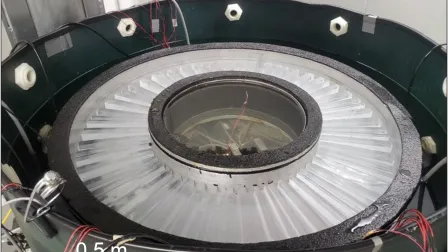
Accurately predicting ice-sheet mass balance and associated sea-level rise requires understanding ice behavior in two previously unexplored regimes: at very high temperature, where the ice is at its melting point, and at very high strain. In large ring-shear experiments, we find that temperate ice—at its pressure-melting temperature and containing intergranular water—is linear-viscous (n ≈ 1), in contrast to the nonlinear flow law typically used in ice-sheet models (n ≈ 3–4). This linearity likely results from Harper-Dorn dislocation glide and may stabilize modeled ice-sheet responses to stress changes caused from ice shelf disintegration.
To investigate weakening at high strain relevant to shear margins, we are conducting torsion experiments on ice to shear strains exceeding 300%, capturing the coupled evolution of grain size and crystallographic fabric. By combining strain-rate-stepping tests with microstructural analysis, we will isolate the relative roles of grain-size reduction and fabric development in strain softening. Together, these results will provide experimental constraints on the strain-dependent enhancement factor in ice and the magnitude of its viscous anisotropy, improving predictions of strain localization in ice stream shear margins.
Host: Dougal Hansen