
Venus: the St. Louis Astronomical Society October Meeting
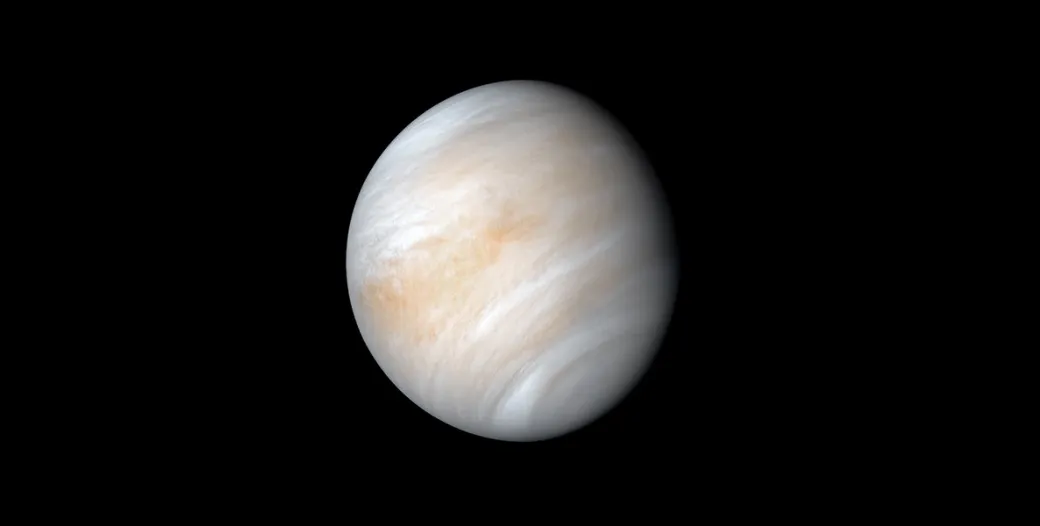
Venus is currently the brightest object, excluding the Moon, in predawn skies. It is twin to the Earth in size and interior composition, but radically different at its surface. The Greenhouse Effect has been primarily responsible for a surface that bakes at almost 900o F. under an atmosphere that produces 90 times the Earth’s pressure. Since NASA’s Magellan spacecraft mission in the 1990s, scientists have had major questions about Venus’ geology, including its volcanic characteristics. With the recent discovery of active volcanism on Venus, understanding just where volcanoes are concentrated on the planet, how many there are, and how big they are becomes all the more important. Dr. Byrne and others have used radar imagery from NASA’s Magellan mission to Venus to catalog more than 85,000 volcanoes across Venus, about 99% of which are less than 3 miles (5 km) in diameter.
Dr. Paul Byrne is an Associate Professor in the Department of Earth, Environmental, and Planetary Sciences at Washington University in St. Louis. He received his BA in geology and PhD in planetary geology from Trinity College Dublin, Ireland. Dr. Byrne's research focuses on comparative planetary geology—comparing and contrasting the surfaces and interiors of planetary bodies, including Earth. His research projects span the solar system from Mercury to Pluto and, increasingly, to the study of extrasolar planets. He uses remotely sensed data, numerical and physical models, and fieldwork in analog settings on Earth to understand why planets look the way they do.
The St. Louis Astronomical Society is an organization for individuals interested in astronomy and telescopes. The public is invited to attend its meetings, telescope observing sessions, and special events. For more information about Astronomical Society events, please visit www.slasonline.org.
Free parking will be available.